

Falls are a major health risk for seniors and elderly due to age-related declines in balance, often resulting in severe shoulder injuries such as dislocations, fractures, or deep soft tissue tears. Unlike younger individuals, seniors frequently face decreased bone density and muscle loss (sarcopenia), which worsen shoulder injuries and significantly prolongs the healing process. Without proper support, the injured shoulder is highly vulnerable to secondary micro-trauma, potentially leading to chronic inflammation or adhesive capsulitis (frozen shoulder). Therefore, stable and continuous arm immobilization and arm support is essential; an arm sling effectively offsets the downward pull of gravity, restricts improper movement, and creates the critical foundation for fragile tissues to heal safely before progressing into rehabilitation and recovery.
Beyond fall protection, arm slings provide essential support for several common shoulder conditions and recovery needs in seniors. A specialized sling ensures a safer, more comfortable recovery for conditions like:
Fractures and Dislocations: Since surgery isn't always ideal for older adults, a sling acts as a comfortable "soft cast," holding the arm safely in place so bones can heal naturally.
Rotator Cuff Tears: As shoulders age and tendons wear down, rotator cuff tears become more common in seniors, and a sling relieves sharp pain and provides the rest damaged tissues need to repair.
Stroke Recovery: Muscle weakness after a stroke can cause the arm to drag painfully on the shoulder joint, increasing shoulder instability and discomfort; a sling gently supports the limb to prevent joint damage and reduce discomfort.
Other Needs: Slings also provide crucial support during post-surgery recovery or severe arthritis flare-ups.
For seniors, a shoulder injury often carries the secondary risk of "Frozen Shoulder" (Adhesive Capsulitis), where the joint becomes incredibly stiff and daily tasks like dressing become nearly impossible. Without proper protection, the constant downward pull of gravity on an injured shoulder triggers chronic inflammation and shoulder strain. Because older bodies heal more slowly, this prolonged irritation causes joint tissues to thicken and "freeze" tight. A properly fitted arm sling helps stop this downward spiral by securely lifting the arm to relieve joint strain and reduce inflammation, actively preventing the shoulder from freezing and ensuring a smoother recovery.
Traditional slings hang directly from the neck, forcing the delicate cervical spine to bear the arm's entire weight and leading to significant stiffness and pain. Advanced shoulder slings solve this by using adjustable shoulder pads and torso wraps (swathes) to evenly distribute the weight across the stronger, broader muscles of the back and chest. This ergonomic shift is especially crucial for seniors and elderly, who often experience neck arthritis, poor posture, or reduced upper body strength. By eliminating direct neck strain, a well-distributed sling prevents secondary pain and ensures comfortable, all-day support.
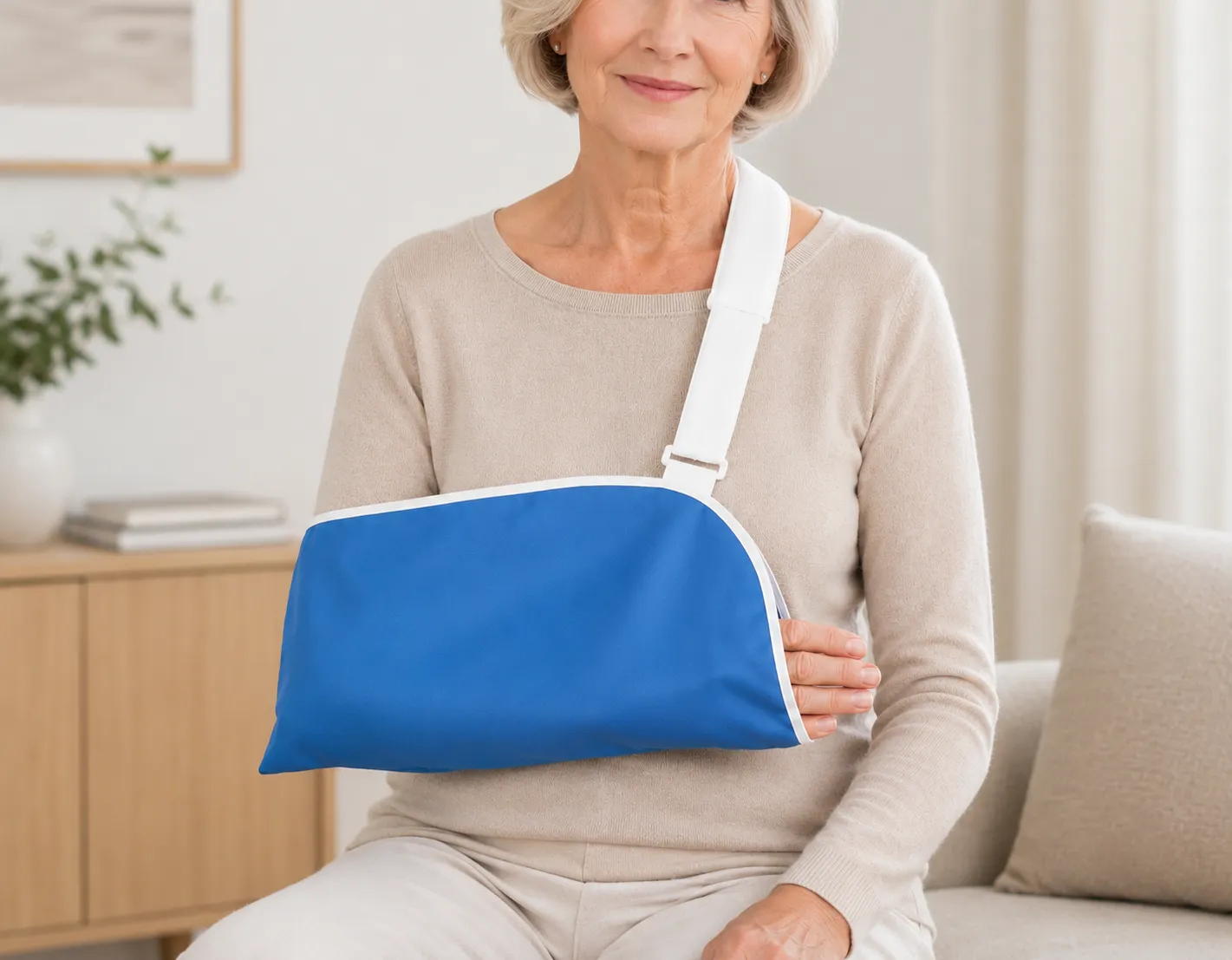
Seniors often have thinner, more delicate skin that is highly prone to irritation. Wearing a standard arm sling all day can trap heat and moisture, increasing the risk of skin irritation, rashes, or chafing during daily wear. A senior-friendly sling utilizes an ultra-lightweight, breathable pouch design to provide excellent ventilation. This constant airflow keeps the arm cool and dry, effectively preventing heat buildup and protecting sensitive skin, ensuring comfortable wear throughout the entire recovery process.
The 3087 ARM SLING focuses on lightweight and breathable support, utilizing ultra-light material to provide excellent ventilation and comfortable daily wear. Adjustable foam padding and hook and loop fasteners also allow easy application and personalized fit.
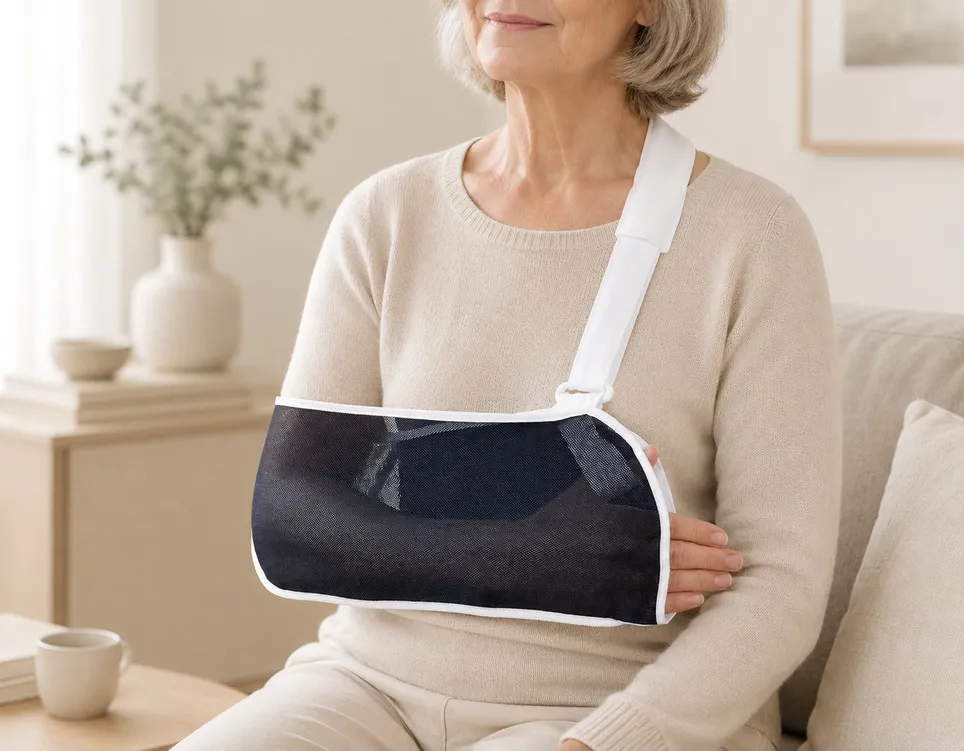
While standard arm slings provide excellent shoulder support, some specialized designs incorporate an ergonomic thumb loop for improved wrist stability and hand positioning. This feature helps keep the hand in a neutral, ideal position, preventing the wrist from drooping forward and ensuring proper alignment for the entire arm. Opting for a sling with a thumb loop is highly recommended for seniors requiring prolonged arm support or for patients with severe upper limb weakness—such as during stroke recovery—who need extra assistance keeping their hand and wrist perfectly stable.
The 3289 MESH ARM SLING features an ergonomic thumb loop design to help maintain proper hand positioning and improve wrist stability during wear. Combined with adjustable hook and loop fasteners, foam padding, and ultra-light mesh material for comfortable support and enhanced ventilation.
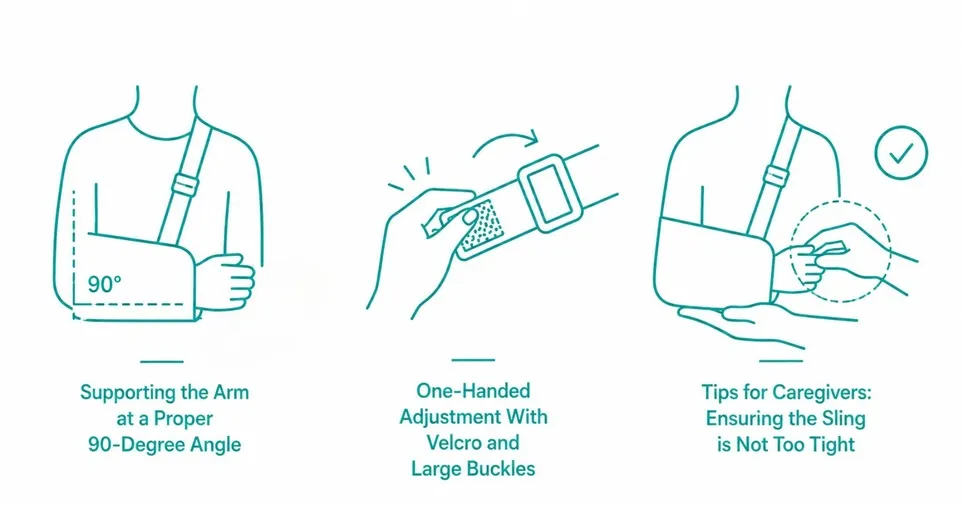
After putting on your arm sling, one of the most important thing to check is whether your elbow is supported at the correct angle. Your arm should rest comfortably at a perfect 90-degree angle, forming a clear "L" shape with your forearm parallel to the floor. Keeping this 90-degree angle is essential for your recovery. It helps promote healthy blood circulation to your hand, preventing stiffness and swelling, and discomfort. Furthermore, it properly balances the weight of your arm, which prevents unnecessary strain and aches in your neck and shoulder.
For seniors, choosing an arm sling equipped with Velcro and large strap buckles is ideal, as these user-friendly closure systems allow for easy one-handed wearing and daily adjustment. The Velcro enables users to quickly pull the strap to a customized, comfortable tightness, while the large buckles—functioning as oversized loops—are easier to grip for individuals with limited hand strength. This is particularly beneficial for individuals with limited finger strength, making it much simpler to thread and secure the strap independently.
It is crucial to ensure an arm sling is not fastened too tightly, as an excessive pressure can compress sensitive nerves, restrict blood circulation, and worsen swelling in the hand and fingers. To check for a proper fit, use the "two-finger rule": you should be able to comfortably slide two fingers between the neck strap and the wearer's body. Additionally, regularly observe the exposed hand; if the fingers appear pale, slightly bluish, or feel unusually cold to the touch, the sling is too tight and must be loosened immediately to prevent tissue damage and ensure a safe recovery.
A cuff and collar belt is a simple, lightweight arm support design that loops around the neck to support only the wrist. Because it keeps the hand elevated but leaves the elbow and forearm completely free to move, it provides minimal restriction and limited stability. As a result, this option is best suited for patients with very minor shoulder sprains or those in the final, active stages of rehabilitation who no longer require strict protection.
A deluxe pouch sling cradles the entire forearm and elbow, providing maximum stability by fully restricting movement and preventing the arm from swinging. This design is highly recommended for seniors recovering from significant trauma—such as falls, fractures, rotator cuff tears, or stroke-related weakness. By securely supporting the full weight of the arm and locking it in a safe, neutral position, a pouch sling delivers the strict immobilization necessary to relieve pain, prevent secondary injuries, and ensure proper healing.

The duration for wearing an arm sling depends entirely on your specific condition and your surgeon's protocol. For fractures or post-shoulder surgery (such as rotator cuff repair), research shows that patients are commonly immobilized for 4 to 6 weeks, often wearing the sling full-time (approx. 20–24 hours a day) except for hygiene and prescribed exercises (Li et al., 2024; Livesey et al., 2022). In many clinical trials, "standard rehabilitation" advises keeping the sling on at all times, removing it only for eating, washing, and dressing (Mazuquin et al., 2024; Littlewood et al., 2020).
For soft tissue injuries like minor muscle or ligament strains, the sling is primarily for comfort and protection; you should wear it as needed during the day when active or in public, but it can typically be removed while resting or sleeping (Reider, 2023). Observational data suggests that seniors (≥60) often wear their slings for over 100 hours per week during the recovery phase (Livesey et al., 2022). Regardless of the injury, it is vital to gently move your wrist and fingers daily to prevent joint stiffness, and always consult your healthcare provider before changing your sling usage.
To prevent neck and shoulder pain while wearing a sling, it is essential to optimize ergonomic fit and maintain dynamic movement. Research indicates that poor posture and prolonged static positions significantly increase the risk of neck and shoulder pain (Mekonnen et al., 2020; Stroke, 2005). Ensure the sling is adjusted so your elbow is at approximately 90° with the forearm horizontal; a sling that is too low or a dangled hand increases the load on the shoulder and neck. Utilizing a wide, padded neck strap can further reduce local pressure and muscle fatigue (Tapanya et al., 2021).
When resting, use pillows to support the forearm and elbow, as external support reduces the muscular effort required to hold the arm, lowering demand on the neck (Kim et al., 2025; Iranzo et al., 2020). If medically cleared, performing gentle neck rotations, scapular squeezes, and stretching exercises can effectively reduce pain and improve function (Tunwattanapong et al., 2016; Tersa-Miralles et al., 2022). Always take frequent breaks to change positions and avoid asymmetric leaning to minimize strain (Mekonnen et al., 2020; Soler-Font et al., 2019).
The optimal angle for an arm sling is condition-specific, as research indicates different positions serve different healing goals. While a 90° elbow flexion is the standard baseline (Langford et al., 2024), specific injuries may require specialized alignment:
Research-Based Sling Angles by Condition
1. Standard Rest & General Support:
• Elbow: ~90° flexion.
• Shoulder: 0–10° elevation with the arm hanging close to the trunk in neutral or slight internal rotation (Langford et al., 2024; Nakamitsu et al., 2025).
2. Rotator Cuff Repair:
• Abduction: Biomechanics often favor 30–45° abduction using a specialized pillow brace to reduce strain on the repair site (Ujash et al., 2024). However, clinical outcomes between abduction braces and standard slings remain similar in the long term (Gao et al., 2023).
3. Proximal Humerus Fractures:
• Surgical Neck: Full internal rotation and adduction minimize deforming forces (Jin et al., 2024).
• Greater Tuberosity: ~45° abduction and neutral rotation are preferred to stabilize bone fragments (Jin et al., 2024).
4. Shoulder Dislocation (Anterior):
• Rotation: External-rotation bracing (0–5° ER) may slightly reduce recurrence compared to traditional internal-rotation slings, though evidence is mixed (Paterson et al., 2010; McCarty, 2014).
To clean a medical arm sling, hand wash it in cool water with mild detergent after removing any metal stays or foam pillows. Ensure all Velcro straps are closed to prevent snagging. Always air dry flat; never use a dryer, as high heat can damage the medical fibers and shrink the fabric (Mekonnen et al., 2020; Santos et al., 2025). For hygiene, it is recommended to spot-clean daily and perform a full wash at least once a week, ensuring the padding is completely dry before reuse to prevent skin irritation.
Last updated: 2026/05
Lian Lee, PT, MSc
Licensed physical therapist with 15+ years of rehabilitation experience. Holding an MSc in Biomedical Engineering from Imperial College London and a PT degree from National Yang Ming University, she specializes in clinical biomechanics and the research and development of rehabilitative technologies.
Rex Lin, PT, MHA
Licensed physical therapist with 10+ years of rehabilitation experience. Holding an MHA from Asia University and a PT degree from Chang Gung University, he specializes in biomechanical analysis and the functional application of orthopedic supports.
Founded in Seattle, Washington in 1997, OPPO has grown into a trusted international medical brand serving over 3.5 million users across 60 countries. With a commitment to precision, safety, and innovation, OPPO designs and manufactures more than 550 products and holds over 30 patents recognized by global design awards such as Red Dot and iF. Guided by the belief that everyone deserves the opportunity to live without limitation, OPPO continues to empower people worldwide to move with confidence and comfort.


Copy Link
